
Dissolvable threads that lift sagging tissue immediately, then leave fresh collagen behind as they absorb.
PDO Thread Lift
Loose skin along the jawline, jowls that weren't there five years ago, a neck that's started to crepe. This is collagen loss showing its structural side, and no cream fixes it.
The non-surgical toolbox is real, though: threads physically lift, radiofrequency and plasma rebuild the collagen scaffolding, and precision fibroblast work tightens the delicate zones lasers can't reach. Which combination makes sense depends on your skin's laxity and your downtime budget.

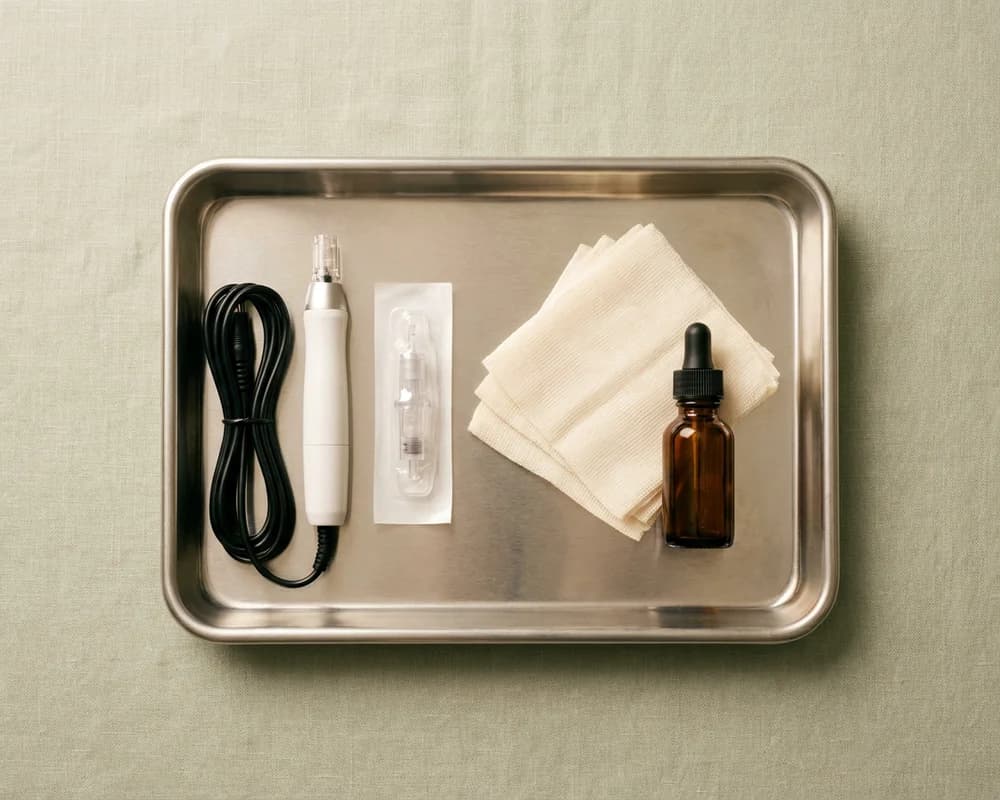
Only one tool in this set physically lifts on the spot: PDO threads. Dissolvable threads are placed under the skin to reposition sagging tissue immediately, and as they absorb over the following months they leave fresh collagen along their path — a mechanical lift that converts into a biological one. Nothing else moves tissue on day one the way threads do.
The energy-based family works slower and deeper. VirtueRF delivers radiofrequency heat through microneedles into the layer where your collagen scaffolding lives, and Opus Plasma does similar structural work with fractional plasma energy strong enough for the neck and chest. Both trigger the same response: your skin rebuilds its own support, and tightening follows over weeks and months.
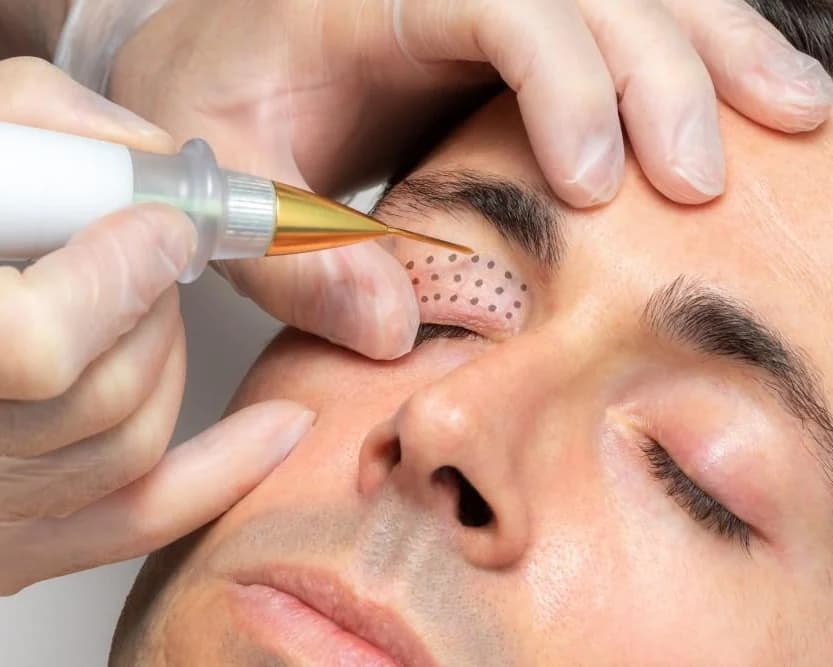
Plasma Pen is the precision instrument. Fibroblast tightening works millimeter by millimeter, which is exactly what the eyelids and under-eyes require — zones too delicate for lasers and too small for threads. Same principle as the rest, a controlled trigger for collagen, just scaled down to the trickiest real estate on the face.
The honest first question is how much laxity you’re carrying. Early looseness responds well to energy treatments alone; more established jowling usually wants threads for the lift plus energy work to rebuild what let go. Skin tightening is not a one-visit purchase either way — VirtueRF and Opus Plasma are typically planned as a series, and threads deliver their collagen dividend over months, not days.
Downtime is the other axis. Opus Plasma is deliberately tunable — a gentler pass heals faster, a stronger one does more per session — while Plasma Pen trades a week or so of visible healing for tightening in zones nothing else reaches. Threads mean brief soreness rather than surface recovery.
What the consultation actually decides is sequencing: which zones need lifting versus tightening, how aggressive each session should be, and how to space treatments so results build on each other. Since none of this is surgery, results are significant but not a facelift — a provider who says otherwise is selling, not advising.
Listed in the order we most often recommend them. Your consultation decides which actually fits your skin, goals, and downtime.
Dissolvable threads that lift sagging tissue immediately, then leave fresh collagen behind as they absorb.
PDO Thread Lift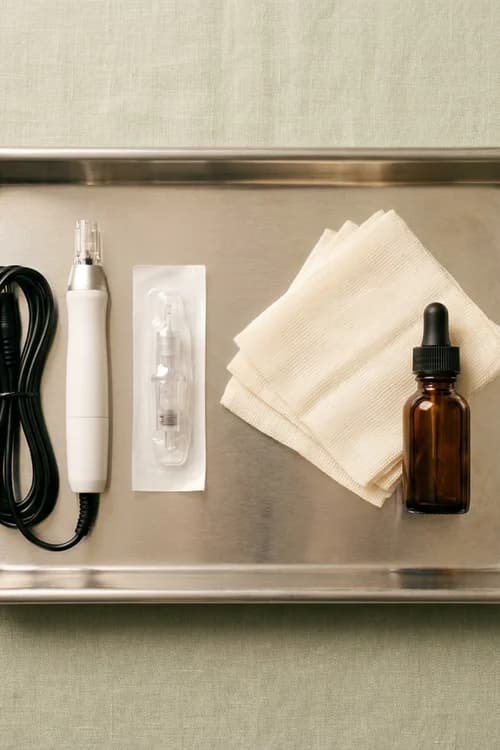
RF microneedling that tightens the face, jawline, and neck while rebuilding their deeper support.
VirtueRF Microneedling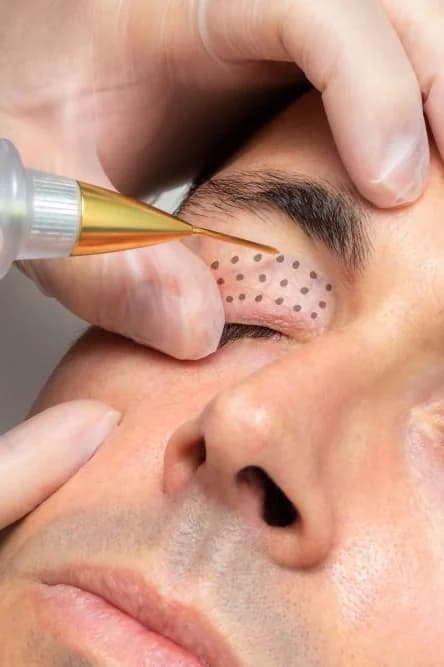
Fractional plasma resurfacing strong enough for the neck and chest, tuned to your downtime.
Opus Plasma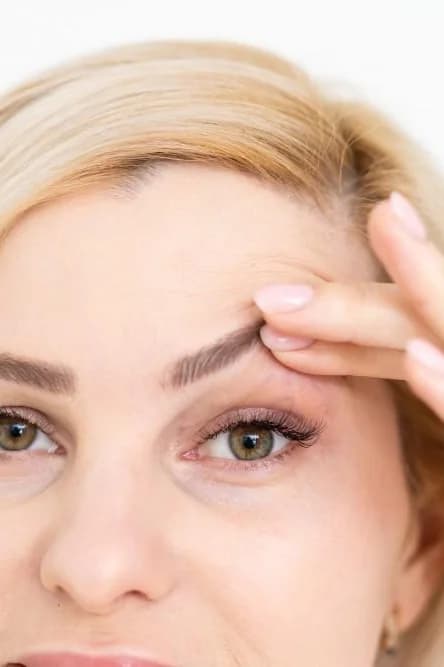
Millimeter-precision fibroblast tightening for eyelids, under-eyes, and other spots too delicate for lasers.
Plasma PenCommon question
A PDO thread lift typically lasts 12 to 18 months. The threads themselves dissolve within about six months, but the collagen they stimulate is what…
Read the answerCommon question
Most people do 2 to 3 sessions, spaced 4 to 6 weeks apart, with results building over 3 to 6 months as collagen forms. Some maintain with a single…
Read the answerRelated concern
Sharpen the chin and jawline
Explore the concernNot sure which is right? That's what consultations are for.
Prefer to talk? Call 630-541-8413 — same-day appointments available.
Medically reviewed by Barbara Kowalczyk, FNP‑BC and Michael Fressola, ACNP‑BC, board-certified nurse practitioners at Skin Med Spa. This page is for education and is not a substitute for a personalized medical consultation.