The only filler FDA-approved for acne scars. It lifts rolling scars immediately and keeps building collagen for years.
Bellafill®
Acne scars outlast the acne by decades: rolling, boxcar, and ice-pick textures that makeup sits in rather than covers. They're also among the best-studied problems in aesthetic medicine, with genuinely effective options.
Every real fix works the same way: controlled injury that prompts the skin to rebuild collagen where the scar tissue sits. The tools differ in depth, downtime, and how many sessions they take. That's what your provider matches to your scars and your calendar.
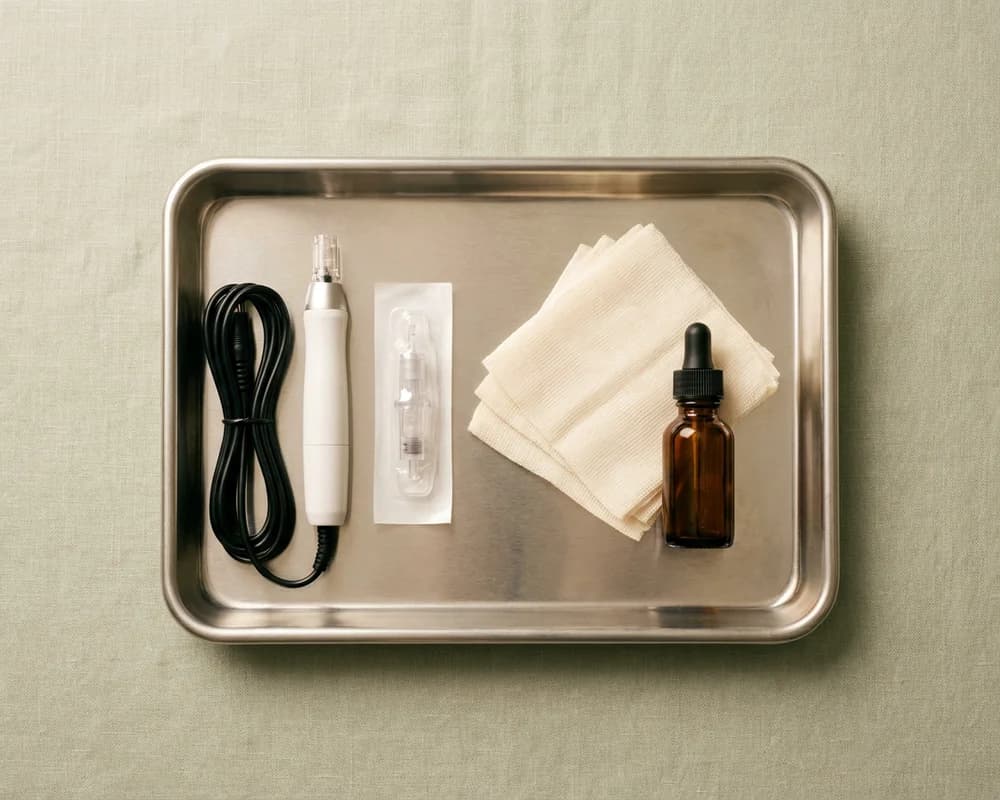
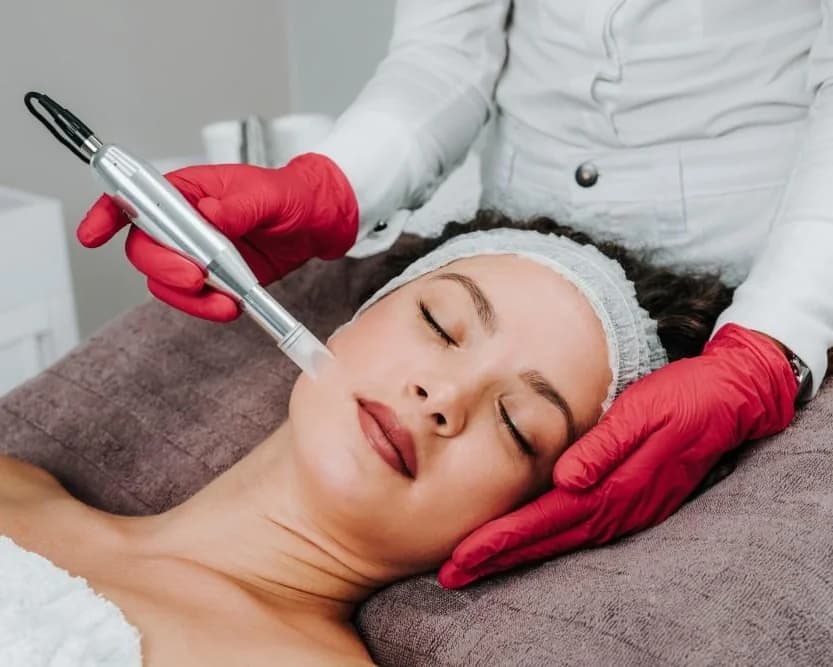
A scar is a depression where collagen never got properly rebuilt, so every real fix works by convincing the skin to finish the job. Microneedling is the plainest version of the principle: thousands of controlled micro-injuries that trigger fresh collagen inside the scar, with PRP or exosomes added to accelerate the repair. VirtueRF takes the same idea deeper, pairing the needles with radiofrequency heat that remodels scar tissue at depth — and it holds up on all skin tones.
The resurfacing family works from the top down. CoolPeel’s CO2 energy removes and rebuilds the surface where etched scars sit, at a fraction of traditional CO2 downtime, while ResurFX remodels the same territory non-ablatively — no broken surface, more gradual results, minimal disruption.
Bellafill is the outlier and the shortcut. Rather than provoking a rebuild, it lifts rolling scars immediately from beneath — the only filler FDA-approved for acne scars — then keeps stimulating collagen around itself for years. For the right scar type, it’s the one option in the set that shows results the day you leave.
Scar treatments trade along three axes. Downtime: ResurFX and microneedling ask for the least, CoolPeel for a few social days, VirtueRF somewhere between. Speed: Bellafill lifts rolling scars immediately; everything else builds over a planned series, because collagen grows on its own schedule and no session can rush it. Depth: ice-pick and deeply etched textures need the stronger tools; shallower rolling texture responds to the gentler ones.
Combination is the norm rather than the exception. Different scar types usually share one face — rolling here, boxcar there — and a plan often pairs a lifting or deep-remodeling treatment with surface resurfacing so both the depression and the texture improve. Budget-wise, this is project spending: a defined series over months, then done, with results that hold because rebuilt collagen is yours.
The consultation is mostly scar-reading. A provider maps which types you have, factors your skin tone — which matters for how aggressively the energy treatments can run — and your calendar, then sequences the series. Expect honest math about session counts before anything is booked.
Listed in the order we most often recommend them. Your consultation decides which actually fits your skin, goals, and downtime.
The only filler FDA-approved for acne scars. It lifts rolling scars immediately and keeps building collagen for years.
Bellafill®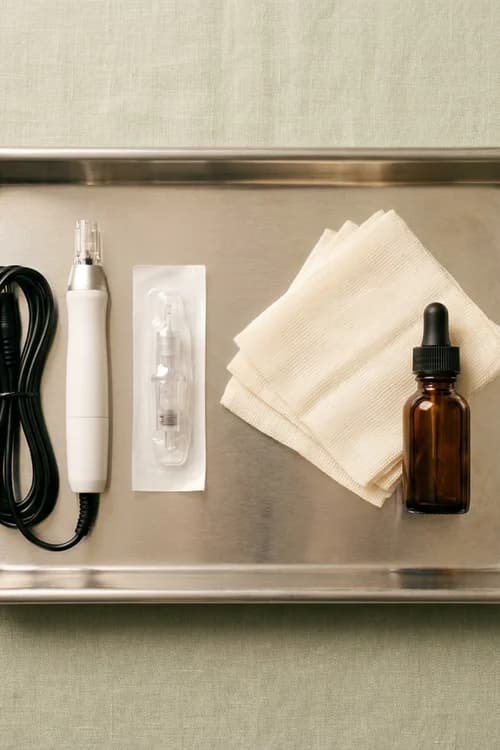
RF microneedling that remodels scar tissue at depth, with real results on all skin tones.
VirtueRF Microneedling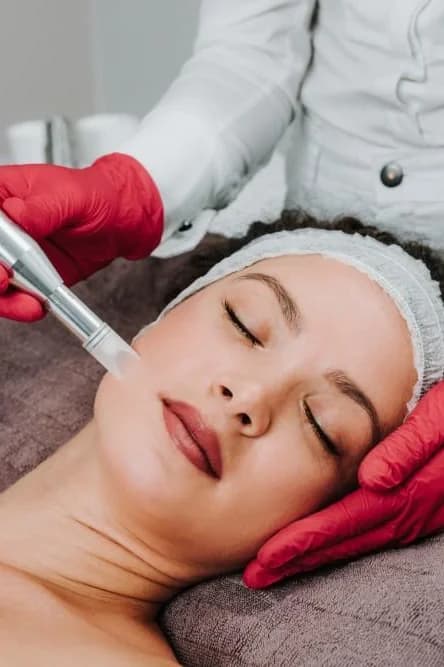
The proven workhorse for scar texture, with PRP or exosomes to accelerate the rebuild.
Microneedling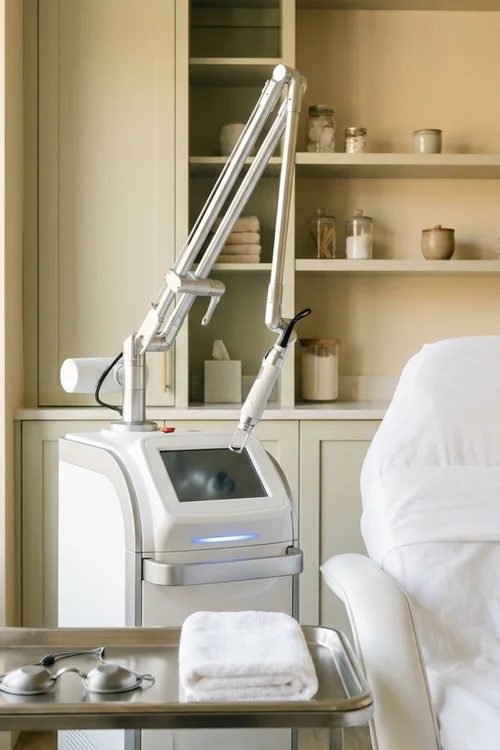
CO2 resurfacing for etched scars, at a fraction of traditional CO2 downtime.
CoolPeel® CO2
Non-ablative ResurFX remodeling that improves scars gradually with minimal disruption.
Skin ResurfacingCommon question
Bellafill lifts rolling acne scars that flatten when stretched. Lasers resurface sharper scars and texture. Find your scar type, and why plans use both.
Read the answerCommon question
Plan on 3 to 6 sessions for most acne scarring, spaced several weeks apart. The number and approach depend heavily on your scar type, and results are…
Read the answerRelated concern
Calm breakouts for teens and adults
Explore the concernNot sure which is right? That's what consultations are for.
Prefer to talk? Call 630-541-8413 — same-day appointments available.
Medically reviewed by Barbara Kowalczyk, FNP‑BC and Michael Fressola, ACNP‑BC, board-certified nurse practitioners at Skin Med Spa. This page is for education and is not a substitute for a personalized medical consultation.